

Landscape Studies

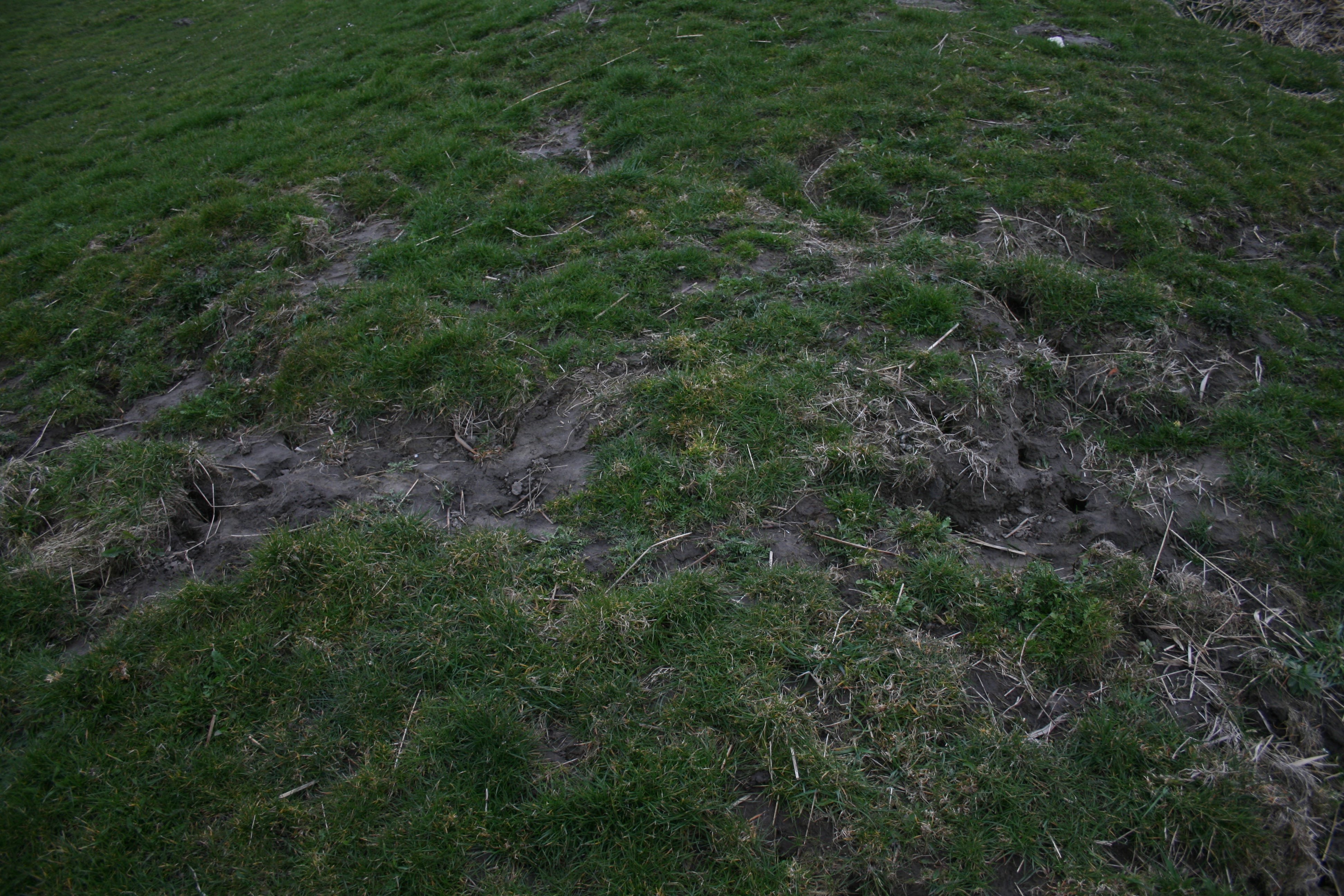
As far as anyone could remember across the flat lands that bled through the horizon, Henningsdorf was Henningsdorf and Kirchstedt was Kirchstedt. When he stood silently on a rock and let the Oste trickle by, Malte knew he was at the junction between the two, a place that was neither one nor the other. Balancing on his right food, then the left, letting his body sway towards Henningsdorf or Kirchstedt, he wondered when his parents would notice that he was gone, and if they would care if they did.
Malte had gotten into the habit of running away when he was six and had come from home from his Einschulung, purple Zuckertüte in hand along with the suffocating impression that something was very wrong. As everyone else had worried about coffee and cake, he had taken the unattended open kitchen door as an invitation to leave. It was exciting to conceal himself from the loud clang of forks and the chatter he couldn’t follow, into the rhubarb fields that had been harvested all summer and that had gone to sleep as school had started for him. Malte could no longer smell their perfume, could hardly imagine it. The Oste gently moved around him, eager to get to the Elbe, as he’d soon learn in geography class. No one spoke, no forks were clanking.
Years later, he was stuck in the same place between Henningsdorf and Kirchstedt. The lands were so flat that he could see the curve of the earth. There was a congregation of forklifts and concrete mixers and excavators and dump trucks, all recognizable from his picture books, all bringing something he couldn’t quite understand. What were they doing in the middle of the rhubarb fields and electric lines? Their metal necks craned above the wiry trees and Malte thought, they must be calling something. Something is about to arrive, they’re waiting for it. From where he was standing, it was impossible to discern the workers tucked in their concave bellies, sandwich in hand and cigarette in mouth, maneuvering the structures in a strange parade that reminded Malte of crows.
On this rock in the Oste, with the water calmly bubbling by and the mosquitoes dancing on the surface, Malte still didn’t know what was supposed to happen that made him so nervous about the trucks, the crows, the gentle heat that pierced through the grey July clouds, his room that seemed to big, as if he were going to fall off a cliff. He was balancing from one side to the other. From Henningsdorf to Kirchstedt, Kirchstedt to Henningsdorf.
When we was twenty-one and home for Christmas, the Oste was frozen over and the trucks were gone, gone with the rhubarb. From afar, perched on his rock between Henningsdorf and Kirchstedt, he could see the fracking plant that employed most of his former kindergarten classmates and some of the workers that had been let go by the Norddeutsche Milch. Nothing much had changed between Henningsdorf and Kirchstedt, Malte thought. People worked and they died. His parents fussed about coffee and cake and his life in Berlin. He was studying History instead of something more sensible. Malte had never thought of himself as someone particularly careless, but his parents had never known about this fear that would bleed through him and bleed out only when he’d stand on this rock in the Oste. Something was doomed to happen, on these flat and icy lands where there once was rhubarb, at a brief moment in time. Now, he could only make out an almost solid mass of snowflakes slowly making their descent. He bit on his frozen lips and have his gloved hands a shake. The snow fell like powdered sugar on a piece of tart. Something was about to go wrong. Something was meant to happen.
Once a married and employed man, once it seemed like the fear would subside and when he thought he wouldn’t need to retreat into the Oste, Malte remembered the times he saw the absence of rhubarb fields as an ominous promise. The rock had disappeared many years before, some time after graduation, when a storm had rolled through the flat lands and displaced many cards and uprooted many gardens. At that time, the river had spilled its guts and temporarily fused Henningsdorf and Kirchstedt, until the certainty that Henningsdorf was Henningsdorf and Kirchstedt was Kirchstedt returned. Malte had had to take a rock from Henningsdorf’s side like a great storm, and place it in the Oste following the original topology, for the narrow riverbed had snaked a bit further than its original route. People from Kirchstedt laughed that they had gained a bit of terrain after the great storm, but they also had had to deal with upturned county roads and hollow trees scattered along the Hauptstrasse. Malte had replaced the rock during a short stint home, where his parents had needed help rebuilding the shattered winter garden. His wife was especially good at bringing depotted plants back to life.
The new rock was a memory of the original one, or of the memories the original rock brought back to life. It was neither the same shape nor placed in the same location, and everything around it had dramatically changed, but in a fit of dread, Malte was standing there, a new father, anguished by the possibility of a new life sprouting where there once had been rhubarb and a milk factory and hollow church trees and a great storm and a fracking plant and depotted plants. When his child turned five, Malte waited for something dreadful to happen. When the child turned ten, he ran away after an argument with his mother, who had said to leave him be, to sweat it out in the August slumber. Malte waited for a great big catastrophe. They never returned to the Oste, which froze over and melted into the lulling current that threw itself in the Elbe. There were ferries, skating and bathing children, fields of a great big nothing that had once been many things. The child grew. Henningsdorf was Henningsdorf and Kirchstedt was Kirchstedt.
how short this is and yet how rich it is <3 merci léa